
Berberine B1 G2 Complete Guide: Blood Sugar, Dosage & What to Expect
The most clinically studied natural glucose regulator — how it works, why bioavailability matters, and the honest results you can expect.
Affiliate Disclosure: This page contains affiliate links. We may earn a commission if you purchase through these links, at no extra cost to you. Our guides are written independently and reflect our honest assessment.
Berberine is one of the most studied natural compounds in metabolic health. Multiple meta-analyses — including a landmark 2012 meta-analysis of 14 randomized controlled trials — show it reduces fasting blood glucose comparably to metformin.
But there's a catch: standard berberine has notoriously poor bioavailability. The molecule is rapidly broken down in the gut before it can be absorbed, meaning much of what you take never reaches your bloodstream.
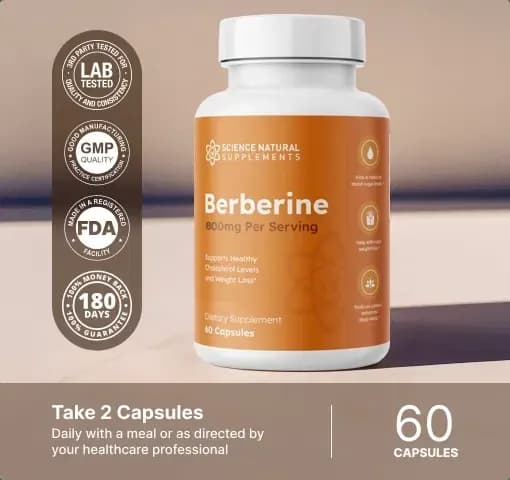
Berberine B1 G2 was formulated to solve this problem. This guide explains how, what to expect, and who benefits most.
How Berberine Works: The AMPK Mechanism
Berberine activates an enzyme called AMP-activated protein kinase (AMPK) — sometimes called the "master metabolic switch."
AMPK activation produces a cascade of beneficial metabolic effects:
**Glucose transport:** Berberine increases the expression of GLUT4 receptors on muscle cells, which absorb glucose from the bloodstream more efficiently — directly lowering blood sugar levels.
**Hepatic glucose production:** Berberine reduces gluconeogenesis (the liver's production of new glucose), which is a primary driver of elevated fasting blood sugar in prediabetics and type 2 diabetics.
**Insulin sensitivity:** By improving cellular response to insulin, berberine reduces the amount of insulin required to manage blood sugar — reducing the "insulin resistance" characteristic of prediabetes.
**Lipid metabolism:** AMPK activation also reduces triglyceride and LDL synthesis, making berberine one of the few supplements with meaningful evidence for both blood sugar and cholesterol management.
Why Berberine B1 G2 Is Different: Bioavailability Enhancement
Standard berberine's main limitation is absorption. Studies show only 5–20% of standard berberine reaches systemic circulation. The rest is metabolized by gut bacteria or converted to berberrubine (less active metabolite) before absorption.
Berberine B1 G2 addresses this through two mechanisms:
**B1 complex (phospholipid delivery system):** Coating berberine molecules in phospholipids (similar to the approach used for curcumin) dramatically increases membrane permeability and absorption. Studies on phospholipid-bound berberine show 3–5x higher plasma concentrations versus standard berberine at equivalent doses.
**G2 sustained release matrix:** Rather than releasing all berberine at once (which overwhelms gut transporters), the G2 matrix releases berberine gradually over 4–6 hours. This maintains higher plasma levels throughout the day with less GI discomfort.
The practical result: you need less total berberine to achieve the same blood glucose effects, with significantly fewer GI side effects than standard berberine.
Ready to try Berberine B1 G2?
See Official Website →Correct Dosage Protocol
**Standard recommendation:** 1 capsule (500mg berberine equivalent) taken 3 times per day, with meals.
**Important:** Always take berberine WITH food, never on an empty stomach. Berberine works by improving glucose transport when glucose is actually present. Taking it without food provides no blood sugar benefit and increases GI irritation.
**Start-low protocol:** If you're berberine-sensitive or have a history of GI issues, start with 1 capsule per day for week 1, then increase to the full 3-capsule protocol in week 2. This minimizes adaptation discomfort.
**Drug interactions:** Berberine inhibits CYP3A4 and CYP2D6 enzymes — the same enzymes that metabolize many prescription medications. If you take statins, cyclosporine, or certain antibiotics, consult your doctor before use. If you take diabetes medication, monitoring blood sugar closely is essential to avoid hypoglycemia.
Realistic Results Timeline
**Week 1–2:** Some users experience a "berberine flush" — temporary GI adjustment including increased bowel movements and mild cramping. This passes by week 2 as gut microbiome adapts.
**Week 3–4:** Fasting blood glucose begins to drop. Typical improvements: 10–20 mg/dL reduction in fasting glucose in pre-diabetic individuals. Post-meal glucose spikes become less pronounced.
**Week 6–8:** HbA1c improvements become measurable (if you're tracking this marker). Lipid panel improvements (reduced triglycerides, modest LDL reduction) often become visible.
**3+ months:** Cumulative metabolic improvements. Many users in the prediabetes range report returning to normal fasting glucose ranges. Weight loss of 5–10 lbs is common as a secondary effect of improved insulin sensitivity.
👍 What We Like
- ✓Most clinically studied natural compound for blood sugar — over 4,000 published studies
- ✓Phospholipid delivery (B1) dramatically improves bioavailability vs. standard berberine
- ✓Sustained-release matrix (G2) reduces GI side effects — the #1 complaint with berberine
- ✓Addresses both fasting glucose AND post-meal spikes
- ✓Secondary benefits: lipid improvement, weight management, anti-inflammatory effects
- ✓60-day money-back guarantee
👎 What to Keep in Mind
- ✗Requires 3 doses per day with meals — adherence can be challenging
- ✗Initial GI adjustment period (weeks 1–2) is common
- ✗Significant drug interactions — not safe without medical supervision for those on prescription medications
- ✗Not suitable as standalone treatment for type 2 diabetes
⚖️ Our Verdict
Berberine B1 G2 represents the state of the art in berberine supplementation. The enhanced bioavailability formula addresses the primary limitation of standard berberine supplements, and the clinical evidence base for berberine's core mechanisms is stronger than virtually any other natural blood sugar compound. For prediabetics, those with elevated fasting glucose, or anyone wanting natural metabolic support alongside dietary changes — this is our top recommendation in the blood sugar category.